

Looking for a warm and tasty dairy-free tomato soup? You’ve come to the right place! This simple recipe packs flavor without the dairy, making it perfect for everyone. I’ll guide you through choosing the best tomatoes, blending techniques, and even some delightful variations. With my tips, you’ll enjoy a bowl of soup that warms the heart and satisfies the taste buds. Let’s make your kitchen smell amazing!
Why I Love This Recipe
- Comforting Flavor: The combination of creamy coconut milk and tangy tomatoes creates a rich and comforting flavor profile that warms the soul.
- Quick and Easy: With a total cooking time of just 30 minutes, this soup is perfect for busy weeknights when you need a delicious meal in a hurry.
- Healthy Ingredients: Packed with vegetables and made with wholesome ingredients, this soup is a nutritious choice that doesn’t compromise on taste.
- Versatile Dish: This creamy coconut tomato soup can be enjoyed on its own, served with crusty bread, or even paired with your favorite protein for a heartier meal.
Ingredients
List of Ingredients
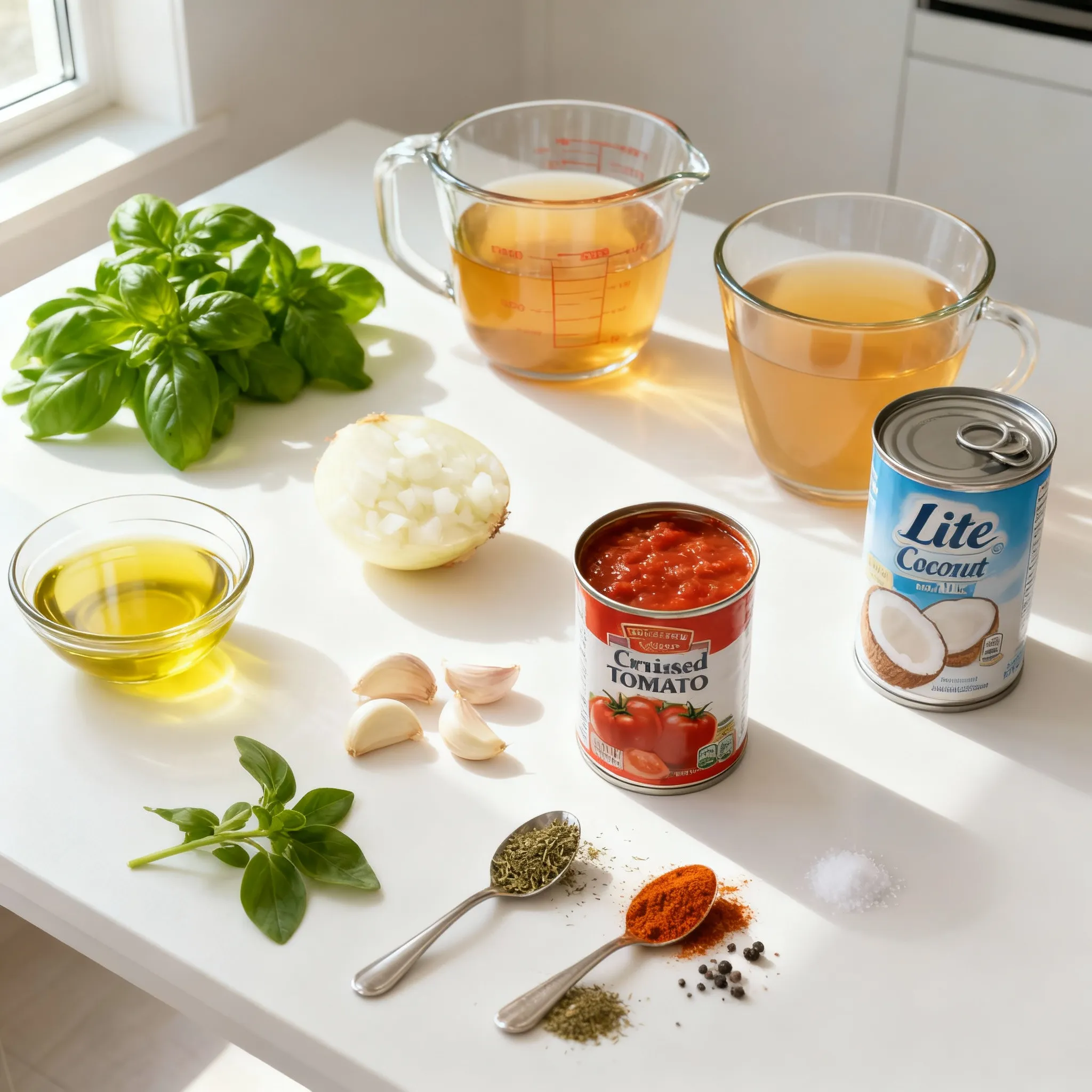
To make this dairy-free tomato soup, here are the ingredients you need:
– 2 tablespoons extra virgin olive oil
– 1 medium onion, finely diced
– 3 garlic cloves, minced
– 1 can (14 oz) crushed tomatoes
– 1 can (14 oz) light coconut milk
– 2 cups vegetable broth
– 1 teaspoon dried basil
– 1 teaspoon dried oregano
– 1 teaspoon smoked paprika
– Salt and freshly ground black pepper to taste
– Fresh basil leaves, torn, for garnish
Quality Tips for Selecting Tomatoes
When picking tomatoes, freshness is key. Look for tomatoes that are firm and smooth. A ripe tomato should feel heavy for its size. The color should be vibrant, with no dark spots. If you can, smell the tomato; a sweet aroma means it’s fresh and flavorful. For this recipe, using crushed tomatoes from a can makes it easy, but choose a brand that uses ripe, whole tomatoes. This gives your soup a rich taste.
Substitutions for Coconut Milk
If you don’t like coconut milk or want an alternative, you can use other options. Almond milk works well, but it will change the flavor slightly. You might also try cashew cream for a rich, creamy texture. Another good choice is oat milk if you want to keep it nut-free. Just make sure to pick a plain, unsweetened type for the best taste.
Step-by-Step Instructions
Detailed Cooking Process
To start, gather your ingredients. You will need olive oil, onion, garlic, crushed tomatoes, coconut milk, vegetable broth, and spices.
1. Heat the oil: In a large pot, pour two tablespoons of olive oil. Heat it over medium heat until it shimmers.
2. Cook the onion: Add one finely diced onion. Sauté for 3 to 4 minutes until it’s soft and translucent.
3. Add garlic: Next, toss in three minced garlic cloves. Stir often for one minute until it smells great but does not brown.
4. Stir in tomatoes and liquids: Pour in one can of crushed tomatoes, one can of light coconut milk, and two cups of vegetable broth. Mix well.
5. Season the soup: Add one teaspoon each of dried basil, oregano, and smoked paprika. Season with salt and black pepper. Stir to blend the flavors.
6. Simmer gently: Raise the heat to bring the soup to a gentle simmer. Lower the heat and let it cook uncovered for 15 to 20 minutes. This helps the flavors meld.
Blending Techniques for Creaminess
After the soup has simmered, it’s time to make it creamy.
– Use an immersion blender: This tool lets you blend the soup right in the pot. Start blending until smooth and creamy.
– Standard blender option: If you don’t have an immersion blender, pour the soup into a standard blender. Blend in batches until it reaches a silky texture.
How to Adjust Cooking Times
Cooking times can vary based on your stove and pot size.
– Check for doneness: If the soup looks thick or the flavors seem off, let it cook a bit longer.
– Taste test: Always taste the soup before serving. You can add more salt or pepper if needed.
This simple method gives you a rich, dairy-free tomato soup that is full of flavor. Enjoy your cooking!
Tips & Tricks
Enhancing Flavor without Dairy
To boost flavor without dairy, use spices and herbs. Smoked paprika adds depth. Fresh basil gives a bright taste. You can also try adding a splash of balsamic vinegar. This will give your soup a nice tang.
Storing Leftovers Properly
Store leftovers in an airtight container. Make sure to cool the soup first. It lasts about three days in the fridge. You can also freeze it for up to three months. Just remember to leave some space in the container for expansion.
Quick Fixes for Common Mistakes
If your soup is too thin, add more crushed tomatoes. You can also mix in a bit of cornstarch with cold water. If it’s too salty, add a pinch of sugar. This will balance the saltiness. Taste as you go to get it just right.
Pro Tips
- Use Fresh Herbs: For a vibrant flavor, use fresh basil instead of dried. Add it at the end for maximum freshness.
- Adjust Consistency: If you prefer a thicker soup, reduce the amount of vegetable broth, or blend less for a chunkier texture.
- Spice it Up: For a spicy kick, add a pinch of red pepper flakes or a dash of hot sauce when cooking.
- Pair with Sides: This soup goes wonderfully with a side of grilled cheese or crusty bread for a complete meal.
Variations
Adding Protein Options
You can boost this soup’s nutrition by adding protein. Here are some great options:
– Chickpeas: Drain and rinse a can of chickpeas. Add them during the cooking process. They add fiber and texture.
– Lentils: Use cooked lentils for extra protein. Mix them in before blending the soup.
– Tofu: Cut firm tofu into cubes. Sauté it with the onions for added creaminess.
Herbal Infusions for Extra Flavor
Herbs can change the taste of your soup. Try these ideas:
– Thyme: Add fresh or dried thyme for a warm taste. Use about a teaspoon.
– Rosemary: A small amount of rosemary gives a nice twist. It pairs well with tomatoes.
– Cilantro: For a fresh note, add chopped cilantro just before serving.
Spice Adjustments for Heat
If you want some spice, here are simple ways to add heat:
– Red Pepper Flakes: Add a pinch during cooking for a little kick.
– Cayenne Pepper: Mix in a small amount for a stronger heat. Start with 1/4 teaspoon.
– Chipotle Powder: This gives a smoky flavor along with heat. Use it sparingly to start.
These variations let you customize your dairy-free tomato soup. Enjoy exploring the flavors!
Storage Info
How to Store Dairy-Free Tomato Soup
To keep your dairy-free tomato soup fresh, let it cool first. Store it in an airtight container. Use glass or BPA-free plastic. It will last in the fridge for about 3 to 4 days. Make sure to label the container with the date. This helps you track its freshness.
Reheating Tips for Best Flavor
When you’re ready to enjoy the soup again, reheat it gently. Pour the soup into a pot over medium heat. Stir often to avoid sticking. You can also use a microwave. Heat it in short bursts, stirring in between. This keeps the flavors bright. Add a splash of vegetable broth if it thickens too much.
Freezing Guidelines for Longer Storage
For longer storage, freeze the soup. First, let it cool completely. Then, pour it into freezer-safe bags or containers. Leave some space for the soup to expand. It can last up to 3 months in the freezer. To use, thaw it overnight in the fridge. Then, reheat as mentioned above for the best flavor.
FAQs
Can I make this soup nut-free?
Yes, you can make this soup nut-free. The main ingredient that may cause concern is coconut milk. If you want a nut-free option, use oat milk or soy milk instead. Both options keep the creamy texture without adding nuts. This way, anyone with nut allergies can enjoy this tasty dish.
What should I serve with dairy-free tomato soup?
This soup pairs well with many tasty sides. Here are some great options:
– Grilled cheese sandwiches
– Crusty bread for dipping
– A fresh garden salad
– Roasted vegetables
These sides add flavor and texture to your meal. They also make it more filling.
How can I make this soup thicker?
If you want a thicker soup, try these methods:
– Add a tablespoon of cornstarch mixed with water.
– Blend in more cooked vegetables, like potatoes or carrots.
– Let the soup simmer longer to reduce liquid.
Each of these options will give you a rich, creamy texture. Adjust it to your taste!
This blog post covered all you need to know for making tasty, dairy-free tomato soup. We explored the right ingredients, like how to choose quality tomatoes and how to safely substitute coconut milk. I shared step-by-step cooking tips to make your soup creamy, and we discussed how to boost flavors without dairy.
Finally, you learned to store your soup and even make adjustments for different tastes. Remember, cooking is about exploring and having fun. Enjoy your delicious soup, and keep experimenting with new flavors and idea